
A critique of modernist thought in Said Nashid's book "Modernity and the Qur'an": An analytical and doctrinal study
Article Sidebar
Published:
Jan 1, 2026
Keywords:
Modernity, the Holy Quran and its compilation, divine revelation, Quranic sciences, Islamic creed, Quranic exegesis
Main Article Content
Abstract
With the onset of intellectual exchange between the Islamic world and modern Western thought, new intellectual trends emerged that sought to reinterpret the Holy Quran using methodologies imported from Western philosophy, particularly the historical method, modern hermeneutics, deconstruction, and historical-critical analysis of texts. Proponents of these trends proceeded from the premise that religious texts are not immune to historical and critical study, and that they are subject to the same laws that govern other human texts. This led to a re-examination of many established principles held by Muslim scholars regarding revelation, the compilation of the Quran, its authority, and methods of interpretation. The Moroccan thinker Said Nashid is among the most prominent writers who adopted this approach in his book "Modernity and the Quran." In it, he attempted to reconstruct the relationship between Muslims and the Quran in light of a modernist perspective, discussing issues of revelation, the Quranic text, its compilation, interpretation, legislation, religious freedom, ethics, and other fundamental principles within the Islamic worldview. His proposal was not limited to reinterpreting the text, but extended to questioning the very foundations of Islamic authority, calling for a shift from textual to humanistic authority, and from the authority of revelation to the authority of modern reason.
Downloads
Download data is not yet available.
Article Details
How to Cite
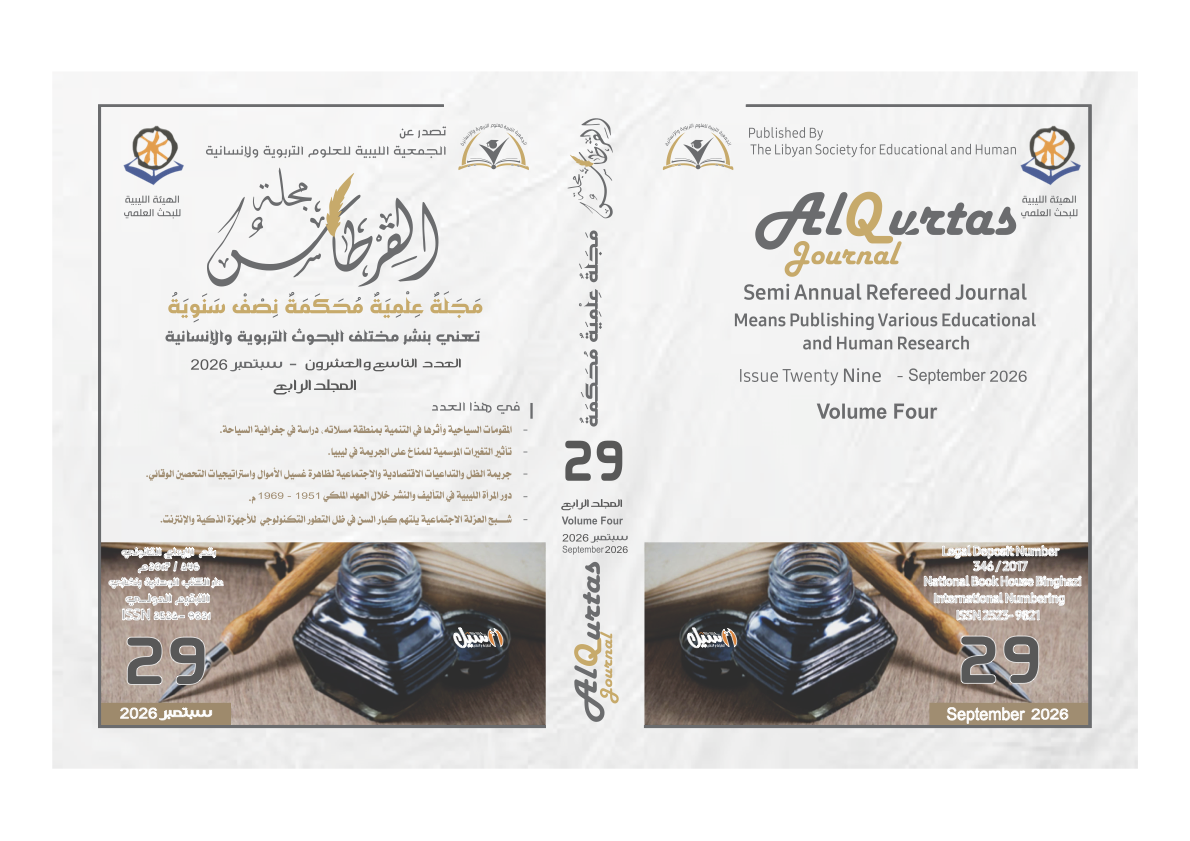
Majeed ر. ف. م. (2026). A critique of modernist thought in Said Nashid’s book "Modernity and the Qur’an": An analytical and doctrinal study. Al-Qurtas Journal for Human and Applied Sciences, 4(29), 510–533. Retrieved from https://alqurtas.alandalus-libya.org.ly/ojs/index.php/qjhar/article/view/qjhar-29-4-23
Section
Articles

This work is licensed under a Creative Commons Attribution-NonCommercial 4.0 International License.